Root canal treatment is used to remove infection or inflamed tissue from inside a tooth, relieve symptoms and help preserve the natural tooth.
At Apex Endodontics, treatment is provided using specialist expertise, advanced imaging, dental operating microscopy and a strong focus on patient comfort.
If your dentist has recommended root canal treatment, a previous treatment has not healed as expected, or you have persistent tooth pain that is difficult to diagnose, our team can assess the problem and explain your options clearly.
Inside each tooth is soft tissue called the dental pulp. This contains nerves and blood vessels and extends into narrow channels inside the roots.
If the pulp becomes inflamed, damaged or infected, it may not be able to heal without treatment.
Root canal treatment involves:The purpose is to control infection and retain a tooth that might otherwise need to be removed.
Treatment may also be required when an earlier root canal has not fully resolved infection or symptoms.
Symptoms vary, and some teeth with pulp damage cause few obvious signs.
Possible symptoms include:These symptoms can have different causes, so an accurate diagnosis is essential before treatment begins.
Natural teeth are designed to work with the rest of your bite.
Where a tooth can be predictably treated and restored, keeping it may help you:Not every tooth can or should be retained. The clinician will assess its condition, available tooth structure, gum support and long-term prognosis before recommending treatment.
GDC specialist expertise
Dr James Fitton is a GDC-registered specialist in endodontics with specialist training from Guy’s Hospital and further international education in advanced microsurgical techniques.
A practice focused on endodontics
Apex concentrates on the diagnosis and treatment of problems affecting the dental pulp and root canal system, including complex and previously treated cases.
Dental operating microscopy
High magnification and enhanced illumination help the clinician inspect detailed root anatomy, identify small canal entrances and work precisely.
Advanced imaging
Digital imaging and CBCT, where clinically justified, can help reveal complex anatomy, hidden infection, resorption, fractures and other features that may not be clear on a standard image.
Complex-case options
The practice provides root canal treatment, re-treatment, apical surgery, perforation repair, resorption management, dental-trauma care and selected advanced tooth-preservation procedures.
Clear communication
The team explains the diagnosis, options, limitations and likely next steps before treatment begins.
Your clinician will discuss your symptoms and dental history, examine the tooth and carry out appropriate diagnostic tests.
Existing X-rays will be reviewed and further imaging may be recommended if needed.
The assessment considers:
Local anaesthetic is used to numb the tooth and surrounding area.
The tooth is prepared so the clinician can access the root canal system while working in a controlled treatment field.
3. Accessing the root canalsA small opening is made in the tooth.
Using magnification and specialised instruments, the clinician locates the canals and assesses their internal anatomy.
4. Cleaning and disinfectionInflamed or infected tissue is removed.
The root canals are carefully shaped and disinfected to reduce bacteria throughout the internal canal system.
5. Filling and sealingOnce the canals have been prepared and disinfected, they are filled and sealed using appropriate endodontic materials.
The aim is to prevent bacteria from re-entering the canal system.
6. Coronal sealA temporary or permanent seal is placed in the access opening.
Depending on the treatment plan, Apex may provide this restoration or return you to your general dentist for the final filling, crown or other restorative care.
7. Follow-upYou will receive aftercare guidance and information about any further appointments or monitoring required.
Apex will communicate with your referring dentist where applicable.
Every tooth is different.
At Apex Endodontics, a typical treatment appointment lasts around 90 minutes. Most cases are completed in a single visit, although complex infections, re-treatment or difficult anatomy may require an additional appointment.
The clinician will provide an estimated appointment plan after assessing your tooth.
Root canal treatment is carried out using local anaesthetic, and the team will check that you are comfortable before proceeding.
Patients often attend because a tooth is already painful or inflamed. Treatment is intended to address the underlying cause of that discomfort.
It is possible to experience some tenderness after treatment, and experiences vary between patients. You will receive individual aftercare advice and should contact the practice if you have concerns.
We understand that the words “root canal” can cause anxiety.
At Apex, appointments are calm and carefully explained. The team takes time to discuss what will happen and helps patients feel informed and in control.
During longer appointments, you may also be able to relax and watch your preferred programme on Netflix.
One particularly nervous patient said that treatment was nothing like they had expected, describing the appointment as comfortable, smooth and easier than anticipated.
Meet the team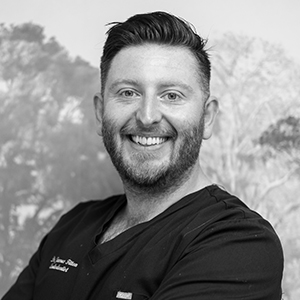
MChD BChD BSc MFDS RCS (Ed) MClinDent (Endodontology) MEndo RCS (Eng) Mendo RCS (Ed)
Dr James Fitton is a GDC-registered specialist in endodontics.
His specialist training at Guy’s Hospital and additional international education have developed his expertise in complex non-surgical treatment, microsurgery, intentional reimplantation and tooth autotransplantation.
James focuses on combining technical precision with calm communication and patient comfort.
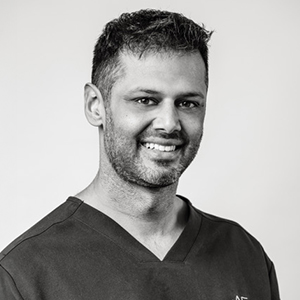
BDS, MSc, MClinDent, MEndo RCS (Ed.), FEndo RCS (Ed.)
GDC No. 229012
Dr Noman Athwal qualified from King’s College London in 2012 and has worked in endodontic referral practice since 2016, including experience in established Harley Street clinics.
His clinical background allows him to accept complex root canal treatment, re-treatment, apical surgery, resorption, trauma and challenging pain-diagnosis cases.
"I was very, very nervous the week leading up to seeing James. The day beforehand I was almost considering cancelling actually. I was really, really nervous. So the treatment with James was nothing like I expected. I genuinely almost fell asleep in the chair. I'm just shocked that a root canal could be that painless. It was easy. He made me feel comfortable. I was out quicker than I thought I'd be. It was just so smooth."
- Lamorna -
After root canal treatment, the tooth needs an effective seal and appropriate restoration to protect it from bacteria and future damage.
Depending on the tooth and treatment plan, you may need:Where the patient has been referred by a general dentist, Apex provides a report and returns the patient for the appropriate ongoing restoration and care.
Follow the aftercare advice supplied and attend any recommended appointments.
A tooth that has previously received root canal treatment can sometimes develop persistent pain or signs of infection.
Possible reasons include:Re-treatment involves carefully removing previous materials, reassessing the canal system under magnification, disinfecting it again and placing a new root filling.
Specialist re-treatment may help save a tooth that would otherwise be considered for extraction, although suitability and prognosis must be assessed individually.
If infection remains around the end of a root after previous treatment and non-surgical re-treatment is not appropriate, an apicoectomy or root-end surgical procedure may be considered.
Apex performs microsurgical root-end treatment in suitable cases using operating microscopy and contemporary techniques.
The clinician will explain why surgery is being considered, the alternatives and the expected outcome before treatment.
No treatment can guarantee that every tooth will be retained.
Root canal treatment may not be suitable when:If treatment is not recommended, the clinician will explain the reason and discuss appropriate alternatives with you and your general dentist.
Real clinical cases can help demonstrate how different endodontic problems are assessed and treated.
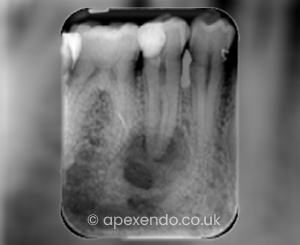
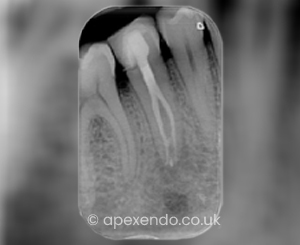
Apex will explain the likely fees after assessing the case.
Treatment may be recommended when the dental pulp has become inflamed, damaged or infected. It removes infected tissue and bacteria from inside the tooth so the tooth can be disinfected, filled and retained where possible.
Symptoms may include persistent pain, sensitivity, pain when biting, swelling, tenderness, a gum boil or darkening of the tooth. Some infected teeth produce few symptoms and are identified on examination or imaging.
The tooth is numbed with local anaesthetic before treatment. The team checks that you are comfortable before proceeding, although individual experiences and recovery vary.
A typical treatment appointment at Apex lasts around 90 minutes. Most cases are completed in one visit, but complex cases can require an additional appointment.
Referral may be recommended because of complex anatomy, a difficult diagnosis, a molar tooth, previous failed treatment, trauma, resorption, suspected cracks or the need for advanced imaging and microscopy.
A specialist can assess why symptoms or infection have persisted. In suitable cases, re-treatment can remove the earlier root filling, locate untreated anatomy, disinfect the canals again and place a new seal.
No. Treatment is only recommended when the tooth can be predictably cleaned, sealed and restored. Severe structural damage, root fracture or inadequate gum and bone support may make extraction more appropriate.
Some teeth require a crown or another protective restoration following root canal treatment. The recommendation depends on the tooth, remaining structure and bite. Apex and your general dentist will explain the restorative plan.
Alternatives depend on the condition of the tooth. They may include monitoring in selected circumstances, extraction, re-treatment or surgical endodontics. The implications of each option will be explained before you decide.
Follow the individual aftercare instructions provided by the team, avoid damaging the tooth before its final restoration, attend recommended appointments and continue thorough brushing and interdental cleaning.
Tell the team when you contact the practice. Appointments are explained carefully and paced around patient comfort. You can ask questions and discuss any concerns before treatment begins.
Unit 6
Thame Park Business Centre
Wenman Road
Thame OX9 3XA
Telephone: 01865 294655
Email: info@apexendo.co.uk
Opening hours are Monday to Friday, 8.30am to 5.00pm.
Apex Endodontics
Unit 6 Thame Park Business Centre
Wenman Road, Thame OX9 3XA
Call us: 01865 294655
Email: info@apexendo.co.uk
Opening HoursMonday to Friday 8.30 am - 5.00 pm
Saturday & Sunday Closed